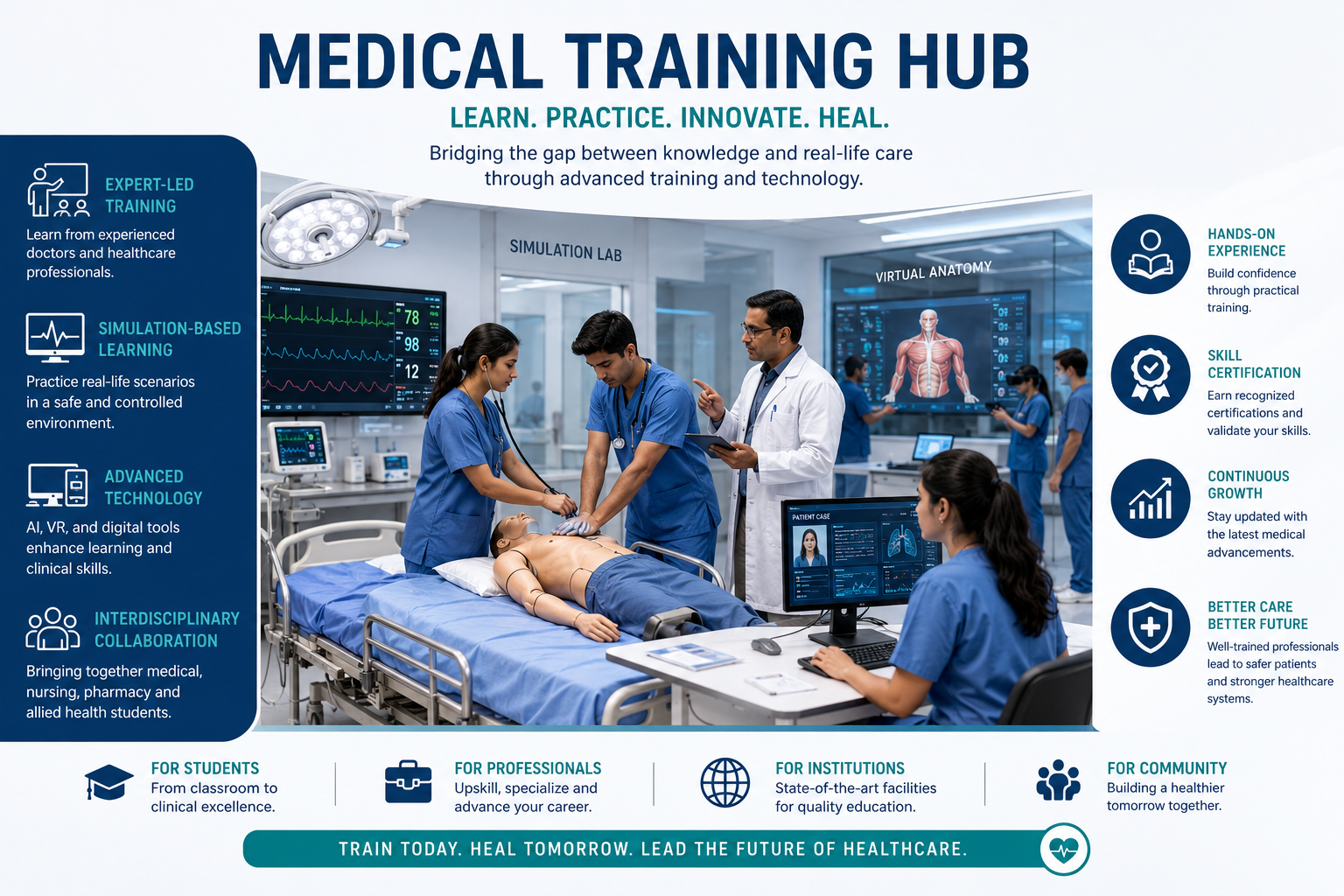
A medical training hub is a centralized learning ecosystem designed to equip students, healthcare professionals, and researchers with practical skills, clinical knowledge, and hands-on experience in the medical field. These hubs combine advanced technology, expert instruction, and real-world simulations to bridge the gap between theoretical learning and clinical practice.
What is a Medical Training Hub?
A medical training hub is more than just a classroom or hospital training ward. It is an integrated platform where medical education, simulation-based learning, and professional development come together.
These hubs often include:
- Simulation laboratories for clinical practice
- Digital learning platforms and virtual classrooms
- Research and innovation centers
- Collaboration spaces for multidisciplinary training
The goal is to create a safe and controlled environment where learners can practice procedures before working with real patients.
Key Features of Medical Training Hubs
1. Simulation-Based Learning
Modern hubs use high-fidelity mannequins and virtual reality tools to replicate real-life medical scenarios. This allows trainees to practice surgeries, emergency response, and diagnostics without risk.
2. Expert-Led Instruction
Experienced doctors, surgeons, and healthcare educators guide learners through structured programs, ensuring industry-relevant knowledge and skills.
3. Technology Integration
From AI-assisted diagnostics to virtual anatomy labs, technology plays a crucial role in enhancing learning efficiency and engagement.
4. Interdisciplinary Training
Medical training hubs often bring together nursing, pharmacy, physiotherapy, and medical students to encourage teamwork and holistic patient care.
Importance of Medical Training Hubs
Medical training hubs are essential for improving the quality of healthcare systems worldwide. They help in:
- Reducing medical errors through practice-based learning
- Enhancing clinical decision-making skills
- Improving patient safety standards
- Keeping healthcare professionals updated with modern practices
- Supporting continuous professional development
Benefits for Students and Professionals
For students, these hubs provide a smooth transition from academic learning to clinical practice. For professionals, they offer opportunities for upskilling, specialization, and staying current with medical advancements.
Key benefits include:
- Hands-on clinical experience
- Exposure to real-world case studies
- Certification and skill validation
- Networking with healthcare experts
Conclusion
A medical training hub plays a vital role in shaping the future of healthcare by producing competent, confident, and well-trained professionals. As medical science continues to evolve, these hubs ensure that education keeps pace with innovation, ultimately leading to better patient care and stronger healthcare systems.